

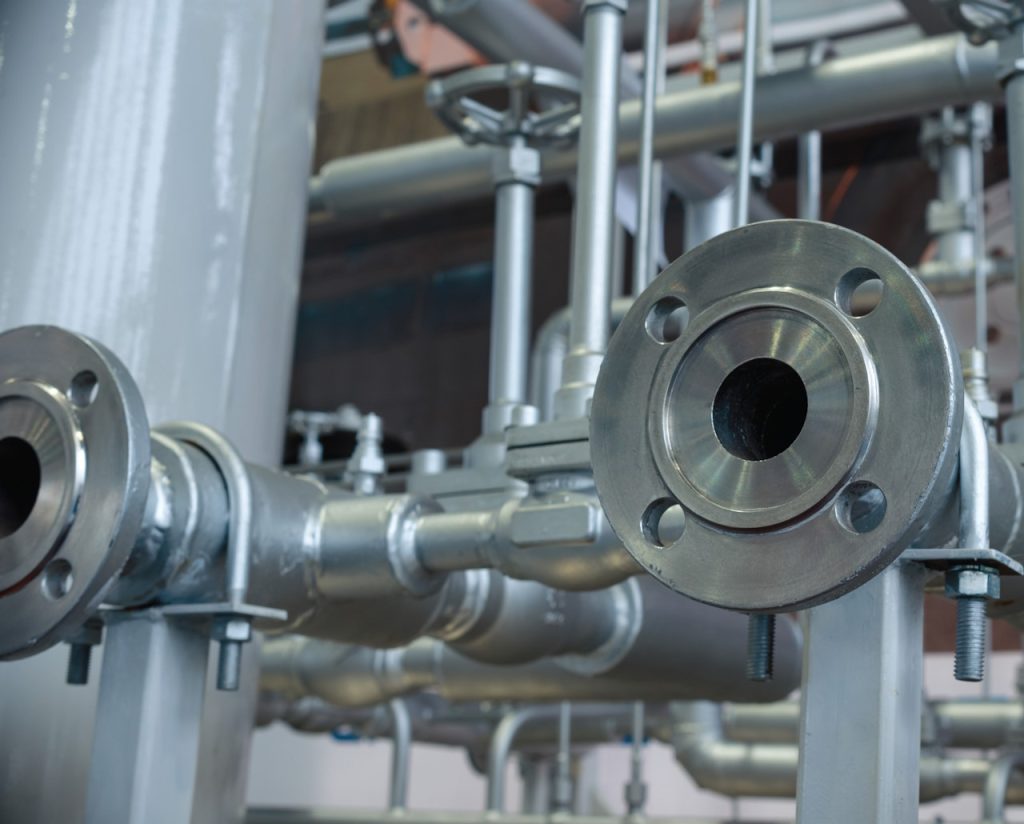
Cryogenic ball valves play a vital role in LNG, hydrogen and CO2 systems, where extreme cold meets engineering precision. This article explores how global standards like API 6D and BS 6364 define safety, performance and reliability in cryogenic applications.
Zahra Farrokhi, Atilla GÜVEN, Batu Valve Türkiye
Meeting API 6D and BS 6364: Global benchmarks for cryogenic valves
Cryogenic ball valves represent a critical interface between engineering innovation and safety in LNG, hydrogen and CO2 applications. International standards provide the framework that defines valve performance under extreme cold. API 6D sets requirements for design, testing and operational integrity of ball valves in transmission pipelines, while BS 6364 is the definitive global benchmark for cryogenic service, mandating tests at –196 °C with liquid nitrogen and ensuring zero leakage across body, stem and seat seals (API, 2021; BS 6364, 2018).
BS 6364 requires both hydrostatic and gas-tightness testing at cryogenic temperatures, while also verifying stem seal performance under dynamic cycling. This guarantees that valves will function not only under initial factory acceptance conditions but also after prolonged service in LNG and liquid hydrogen pipelines. More recently, regulators have pushed for harmonisation between BS 6364 and ISO 21011 (cryogenic insulation valves), to improve traceability across different regions (Hartmann Valves, 2015; Emerson, 2017).
These standards not only validate performance but also ensure interoperability across global LNG and hydrogen supply chains. For instance, in European LNG regasification terminals, BS 6364 compliance has become a procurement prerequisite, while US projects still rely heavily on API 6D but increasingly require dual testing for export-oriented LNG projects (Garcia & Martinez, 2025). Recent refinements emphasise fugitive emission reduction, sustainability and resilience under thermal shocks (Morgan, 2021; Velázquez et al., 2022).
Table 1. Typical extended bonnet dimensions for cryogenic ball valves; Based on API 6D, BS 6364, and recent engineering case studie
| Valve Size (DN) | Pressure Class | Face-to-Face | Bonnet Tub OD x wall (mm) | Bonnet length (mm) | Notes / Uses | Citations |
| 25-50 | 150 | ASME B16.10 short | 60-76 x 3-4 | 200-206 | Skids, analyzers, LH2 vents | (Hartmann Valves, 2015; Emerson, 2017) |
| 80-100 | 150/300 | B16.10 short | 95-114 x 5-6 | 250-320 | LNG/LPG lines, BOG lines | (Sim, 2021; Garcia & Martinez, 2025) |
| 150 | 150/300 | B16.10 short | 95-114 x 5-6 | 300-380 | Jetty lines, ship manifolds | (API, 2021; Velázquez et al., 2022) |
| 200 | 300 | B16.10 long | 114-127 x 6-7 | 350-450 | LNG send-out/regas | (Abdullah et al., 2017; Emerson, 2017 |
| 250-300 | 300/600 | B16.10 long | 127-141 x 6-8 | 40-520 | Large transfer lines | (Garcia & Martinez, 2025; Ivancu & Popescu, 2023) |
| 350-400 | 600 | B16.10 long | 141-168 x 8-10 | 450-600 | Trunklines, cold boxes | (Velázquez et al., 2022; Mills & Langner, 2023) |
| 500-600 | 600/900 | B16.10 long | 168-219 x 10-12 | 520-700 | Main LNG/LH2 headers | (Peng et al., 2021; Argus, 2023) |
| 750900 | 600/900 | Project-specific | 219-273 x 12-14 | 650-850 | Export lines / FLNG | (Morgan, 2021; Singh et al., 2022) |
Fugitive emissions and fire-safe testing: ISO 15848 & API 607 in cryogenic applications
Beyond API 6D and BS 6364, valves must increasingly meet ISO 15848 for fugitive emissions and API 607/ISO 10497 for fire-safe performance. Fugitive emissions testing is especially critical for cryogenic hydrogen service, where leakage of small molecules can compromise safety and environmental targets (Peng et al., 2021; Singh et al., 2022). Methane slip in LNG infrastructure is another key driver, as methane’s global warming potential is 84 times higher than CO2 over a 20-year horizon (Carbon-Zero, 2020).
Fire-safe certification ensures valves can maintain containment even after fire exposure, a scenario relevant for LNG terminals and petrochemical facilities. Cryogenic fire testing subjects valves to rapid temperature excursions from –196 °C to over 750 °C, evaluating whether internal components maintain structural integrity (Argus, 2023; Habonim, 2022). The combination of brittle fracture risks at low temperature and oxidation at high temperature creates a dual extreme design envelope.
Integrating these requirements with cryogenic test protocols creates a challenge: maintaining tight sealing at –196 °C while guaranteeing containment under high-temperature fire tests. Manufacturers increasingly adopt low-emission stem packings, double-sealing arrangements, and surface-engineered alloys to comply with these converging standards. For hydrogen service, some designs add secondary containment cavities with purge ports, ensuring that even if a primary seal fails, fugitive emissions can be captured and vented safely (Mills & Langner, 2023).
Extended bonnet designs: Ensuring safe operation below –196 °C
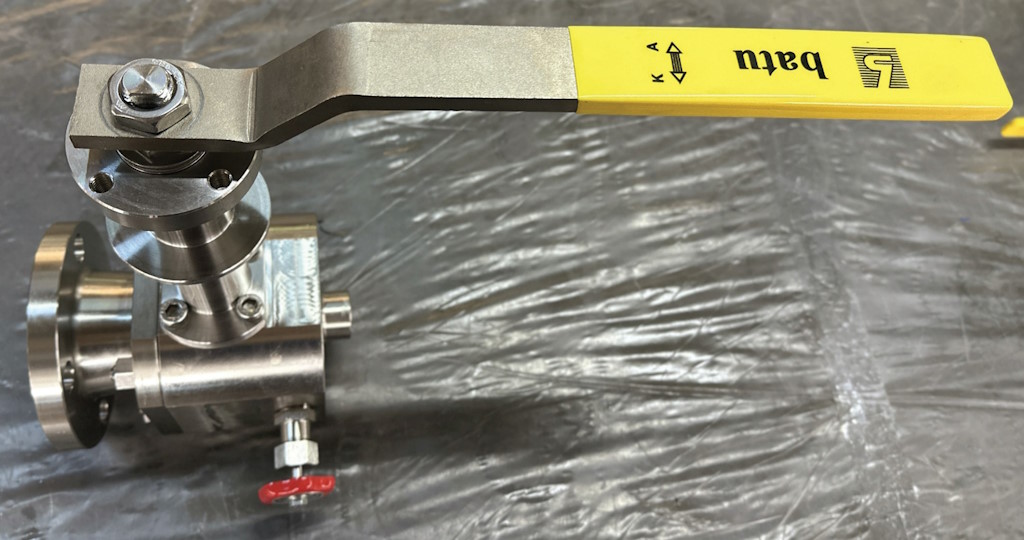
One hallmark of cryogenic valves is the extended bonnet, a design feature that separates the stem packing from the cryogenic fluid, allowing it to remain at near-ambient temperatures. This prevents packing embrittlement and ensures long-term sealing reliability (Hartmann Valves, 2015; Abdullah et al., 2017).
Extended bonnets also minimise frost build-up around operating components, which can obstruct manual operation and increase torque requirements. In LNG shipboard applications, extended bonnets help avoid dangerous icing near operator interfaces, enhancing safety for crew (Sim, 2021). For liquid hydrogen, bonnets play a critical role in reducing helium permeation and maintaining mechanical alignment under thermal cycling (Ivancu & Popescu, 2023).
Computational fluid dynamics (CFD) studies have confirmed that bonnet length and geometry significantly influence vapour column stability and insulation effectiveness (Zhang et al., 2020). Empirical tests show that each 100 mm increase in bonnet length can reduce stem packing temperature by 15–20 °C during steady-state cryogenic flow.
Future innovations in bonnet design are targeting modular geometries that allow customised length based on system insulation, lightweight alloys to reduce offshore topside loads, and integrated heat barriers that lower conduction losses (Emerson, 2017; Garcia & Martinez, 2025).
Seat and seal technologies: From PTFE to metal-to-metal at extreme cold
Sealing systems in cryogenic ball valves must endure thermal contraction, abrasion and cyclic stresses. Traditional PTFE soft seats offer bubble-tight shutoff but risk deformation at ultra-low temperatures. To address this, hybrid designs incorporate PTFE/PEEK composites or transition to metal-to-metal sealing with tungsten carbide, Stellite, or NiCr overlays (Cyrus, 2016; Abdullah et al., 2017).
Recent advances include spring-loaded seat systems that compensate for contraction and maintain contact pressure at –196 °C (Peng et al., 2021; Ivancu & Popescu, 2023). For hydrogen and CO2 applications, where leakage tolerances are stricter, elastic recovery seals and lip-seal configurations have shown superior performance (RAYS, 2023; Landee, 2025).
Testing under BS 6364 protocols confirms that properly engineered cryogenic seats can maintain zero-leakage performance across thousands of thermal cycles (Velázquez et al., 2022). Comparative fire-safe tests show that metal-to-metal seats can sustain shutoff even after exposure to fire, while PTFE/PEEK designs may degrade above 350 °C (Peng et al., 2021).
Seat designs also strongly influence torque requirements. Metal-seated cryogenic valves typically require 30–50% higher actuation torque than soft-seated designs, driving the need for more robust actuators (Morgan, 2021). For LNG regasification plants where valves cycle frequently, hybrid seats provide a balance of tight shutoff and manageable torque.
Table 2. Comparative performance of cryogenic seat and seal materials; Data compiled from cryogenic valve testing studies, CFD/FEA simulations and standard requirements
| Seat / Seal System | Temp Range (°C) | Helium Leak Rate (ISO 15848) | Wear / Erosion | Fire-Safe | Notes | Citations |
| PTFE (virgin) | -100…+180 | 1E-4…1E-5 | Low-Med | Poor | Lowest torque & cost; creep below –150 °C possible | (API, 2021; Ivancu & Popescu, 2023) |
| PTFE + glass/carbon | -120…+200 | 1E-5…1E-6 | Med | Poor-Fair | Stiffer; better wear; higher torque | (Peng et al., 2021; Cyrus, 2016) |
| PCTFE (Kel-F) | -196…+120 | ≤1E-6 | Med | Poor-Fair | Cryo-preferred polymer; stable at –196 °C | (Velázquez et al., 2022; Carbon-Zero, 2020) |
| UHMW-PE | –150…+100 | 1E–5…1E–6 | Med | Poor | Low friction; cold flow under load | (Sim, 2021; Xie & Li, 2023) |
| PEEK | –150…+250 | 1E–5…1E–6 | High | Fair | Strong, wear-resistant; higher torque | (Abdullah et al., 2017; Emerson, 2017) |
| Spring-energized PTFE |
–196…+200 | ≤1E–6…1E–7 | Med-High | Poor-Fair | Preload maintains contact vs shrinkage | (Peng et al., 2021; Hartmann Valves, 2015) |
| Spring-energized PEEK |
–196…+250 | ≤1E–7 | High | Fair | Highest stability & wear; torque |
(Ivancu & Popescu, 2023; Mills & Langner, 2023) |
| Lip-seal (PCTFE/PTFE + elastomer) | –196…+150 | 1E–6…1E–7 | Med | Poor-Fair | Very tight; elastomer O2 compatibility critical | (RAYS, 2023; Landee, 2025) |
| Metal-to-Metal | –196…+500 | 1E–3…1E–4 | Very High | Good | Fire-safe, survives fire; torque | (Cyrus, 2016; Habonim, 2022) |
| Metal C-ring / Helicoflex |
–196…+500 | ≤1E–7 | High | Good | Ultra-low leak; costly; actuation |
(Singh et al., 2022; Garcia & Martinez, 2025) |
Stem integrity and packing systems under thermal contraction
The stem assembly is another critical failure point in cryogenic ball valves. Under rapid cooling, differential contraction between stem, gland, and body can cause leakage, misalignment or packing degradation (Borregales et al., 2014; Jaimes-Parilli et al., 2014).
To mitigate this, cryogenic designs rely on live-loaded stem packings using materials such as graphite, PTFE blends, or low-emission packing per ISO 15848 (Peng et al., 2021; Xie & Li, 2023). Anti-blowout stem designs, mandated by API 6D, add a second level of security.
Extended stem guides and low-friction coatings reduce operational torque at cryogenic conditions (Emerson, 2017; Morgan, 2021). For example, cryogenic torque reduction coatings have cut stem friction coefficients by up to 40%, lowering actuator size requirements. In hydrogen service, double-sealing stem systems with purge connections are emerging as best practice (Habonim, 2022; Mills & Langner, 2023). These systems allow active venting of permeated hydrogen, preventing accumulation that could otherwise lead to explosive atmospheres.
Reliability analysis shows that stem leakage remains one of the leading causes of cryogenic valve failures, accounting for nearly 35% of reported incidents in LNG and liquid oxygen service (Velázquez et al., 2022). Addressing stem integrity is therefore central to long-term reliability.
Fire-safe and fugitive emission tests at subzero temperatures
Combining cryogenic certification with fire-safe and fugitive emission compliance is one of the most demanding challenges in modern valve engineering. Testing protocols simulate rapid transition from liquid nitrogen immersion to direct fire exposure, validating that the valve maintains pressure boundary integrity without catastrophic leakage (API, 2021; Argus, 2023).
Fugitive emission testing under cryogenic conditions also evaluates the valve’s ability to minimise methane or hydrogen release, critical for achieving net-zero goals in LNG and hydrogen infrastructures (Carbon-Zero, 2020; HPS, 2023). Emerging case studies demonstrate that valves designed to dual-certification levels, BS 6364 cryogenic, API 607 fire-safe, and ISO 15848 low-emission, achieve long-term operational reliability while reducing O&M costs (Garcia & Martinez, 2025; Singh et al., 2022).
One LNG export facility reported a 91% reduction in methane emissions after replacing traditional cryogenic valves with ISO 15848-certified units (Argus, 2023). Another hydrogen pilot project demonstrated that dual-certified valves reduced leakage rates by over 70% during thermal cycling compared to conventional BS 6364-only valves (Mills & Langner, 2023).
Conclusion
Advances in cryogenic ball valve technology are pushing the limits of engineering under extreme cold. Through innovations in extended bonnet designs, advanced seat and seal systems, and robust stem packings, manufacturers are meeting and exceeding the dual demands of cryogenic safety and fugitive emission reduction. By aligning with API 6D, BS 6364, ISO 15848, and API 607, modern cryogenic valves are not only ensuring compliance but also enabling the safe and sustainable expansion of LNG, hydrogen, and CO2 transport infrastructure.
The cold standard has truly evolved into a global benchmark for safety, reliability and environmental stewardship, ensuring that cryogenic valves will remain at the core of energy transition infrastructure for decades to come.
About Batu Valve Türkiye
Batu Valve Türkiye is expanding its expertise into cryogenic valve technology, addressing the demanding requirements of LNG, hydrogen and CO2 applications. With a focus on extended bonnet designs, advanced sealing systems and compliance with API 6D, the company is developing solutions that ensure safety, reliability and performance under extreme low-temperature conditions. These innovations reflect Batu Valve’s commitment to supporting global energy transition projects by delivering valves engineered for cold service and sustainable operation.
About this Technical Story
This Technical Story is an article from our Valve World Magazine, November 2025 issue. To read other featured stories and many more articles, subscribe to our print magazine. Available in both print and digital formats. DIGITAL MAGAZINE SUBSCRIPTIONS ARE NOW FREE.
“Every week we share a new Technical Story with our Valve World community. Join us and let’s share your Featured Story on Valve World online and in print.”