

A new gasket design (patent pending) greatly reduces adhesion resulting from the ‘slip-stick’ effect that occurs when valves are not operated for a significant period.
By Guenter Oexler and Veli Yiğit
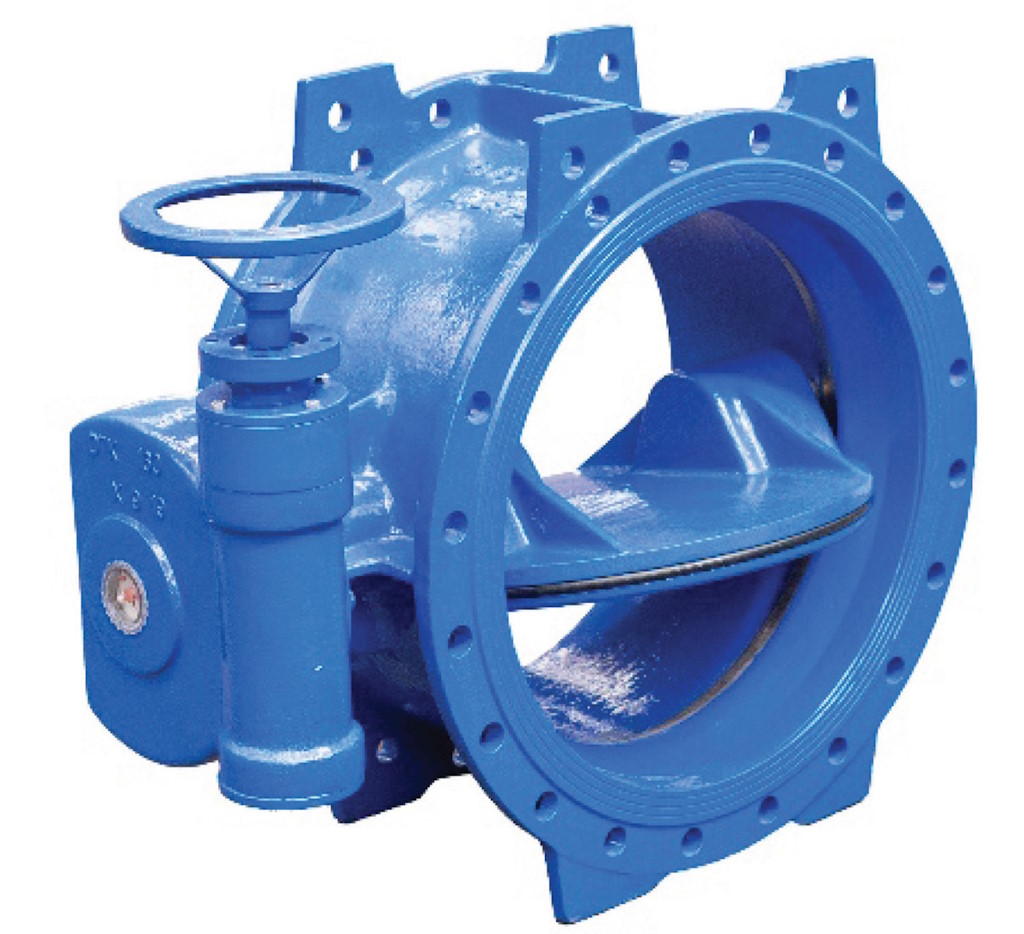
In this article, we discuss the required torque to open and close a double eccentric butterfly valve (Figure 1) and the importance of slip-stick effects.
The area of focus in a double eccentric butterfly valve is on the shaft seal/bearing and the working seal on the obturator (disc seal), as these have the most influence on the valve’s operating torque and lifetime. Commercial considerations are also important as the required torque ultimately determines the size of operating components such as gearboxes and actuators. The challenge is to increase the lifetime of the valve seal (reducing running costs) and decrease torque, which is ultimately due to friction within the valve itself. In this article, we focus on the obturator (valve disc) sealing.
About the authors
 Guenter Oxler is a Process Engineer with decades of experience. He has been a process industry consultant for more than twenty years.

Veli Yiğit is the Head of Engineering at SAMSUN Makina Sanayi in Ankara, Türkiye.
Better sealing, less friction
Existing gasket designs for double-eccentric butterfly valves aim to prevent fluid leakage by maintaining tight contact between the valve disc and the gasket. However, when complete sealing is achieved, the width of the contact surface between the gasket and the disc, along with the high frictional force, significantly increases the torque required during opening and closing operations. This forces the use of larger, more powerful actuators and gearboxes to operate the valves, which in turn increases equipment costs and makes assembly, operation, and maintenance more expensive and complex.
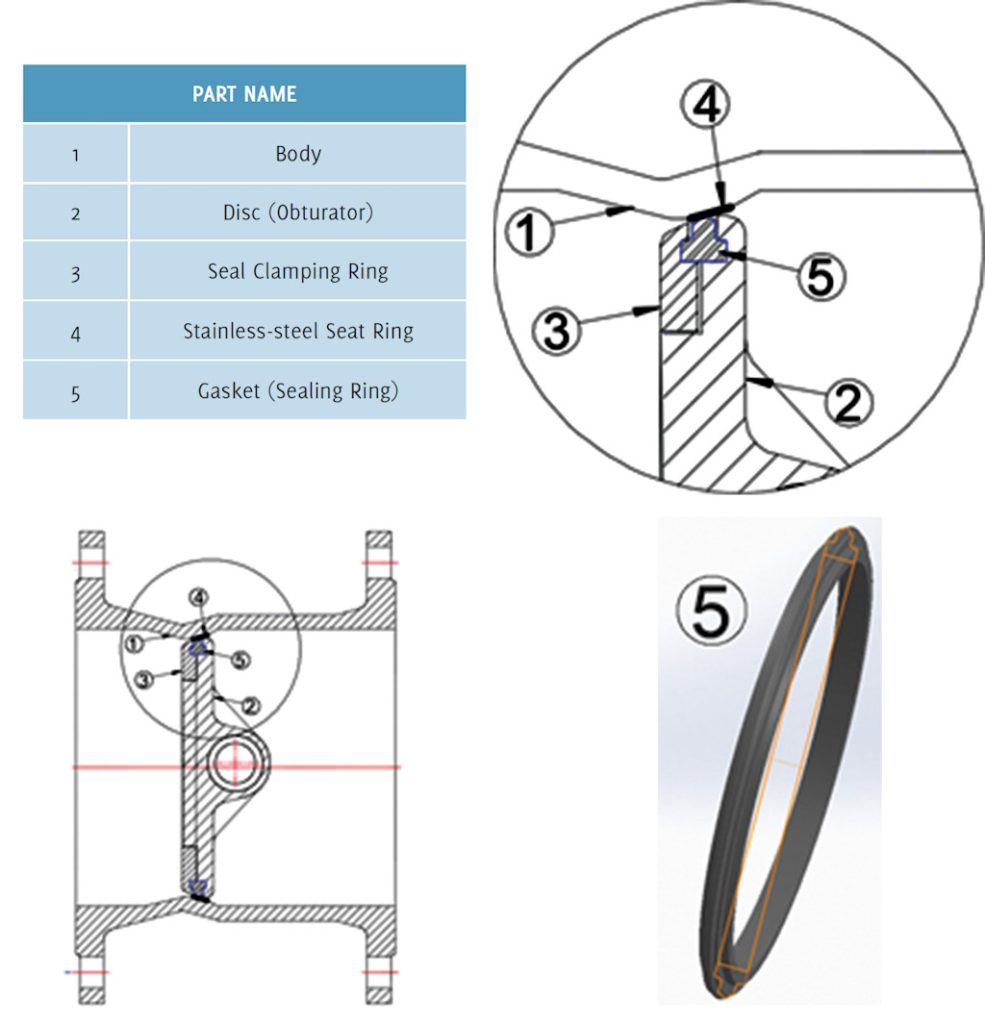
When thinking about better sealing with less friction, we need to keep in mind the different butterfly valve designs, such as the stainless-steel seat ring used in epoxy-coated valves and the seat-ringless design of enamel-coated butterfly valves (Figure 2). Additionally, because double eccentric butterfly valves flow in both directions – in seat and off seat – the valve must tightly seal in both directions.
We have mentioned the commonly used gasket together with a stainless-steel seat ring. It is self-evident that this sealing composition requires very high torque to achieve a tight seal, especially at higher media pressure, due to the large contact area (Figure 3).
Additionally, we must consider that these valves typically undergo few ON-OFF-ON cycles over their lifetimes. Here, we encounter the so-called slip-stick effect, which occurs when butterfly valves remain in the closed position for extended periods, leading to adhesion between the sealing gasket and the gasket seating surface. This adhesion effect can become severe, significantly increasing the torque required during opening and closing operations, particularly if valves are not operated for long periods. This makes it difficult to activate the valve in emergencies and poses a risk to system safety.
New gasket structure
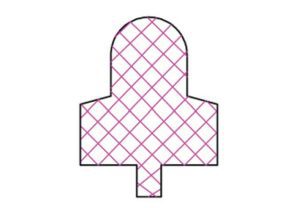
A new gasket design (patent pending) from SAMSUN Makina Sanayi greatly reduces this adhesion effect thanks to its unique geometric design. By sharpening the gasket tip and optimising the contact surface, the adhesion between the gasket and the seating surface remains minimal, even if the valve stays closed for a long time, and the initial operating torque is reduced. As a result, reliable activation is ensured, and the valve can function without operator intervention – especially important for emergency valves.
The new gasket design is not limited to conventional seated valves; it can also be used effectively on butterfly valves without seating surfaces, e.g., enamel-coated valves.
In non-seated valves, the seal’s performance depends directly on the inner lining of the valve body. The new gasket structure is highly compatible with corrosion-resistant coatings such as epoxy, PTFE, enamel, etc. and successfully fulfils the sealing task. Thanks to its tolerance for variations in surface finishes, the gasket provides reliable sealing and a long service life without causing wear on the gasket surfaces. These features make the new gasket design an ideal solution for valves with internal coatings and untreated seating surfaces, providing cost advantages and ease of production with smaller actuating systems in a wide range of applications.
EN 1074 standard
The EN 1074 standard defines the performance and reliability criteria for valves, particularly those used in water supply systems. According to this standard, the sealing performance of butterfly valves is tested based on a specific number of opening and closing cycles. These tests are generally conducted to demonstrate that the valve and gasket system is long-lasting and reliable. The new SAMSUN Makina Sanayi gasket has a lifespan of at least twice the number of opening and closing cycles specified in the EN 1074 standard. This is a significant improvement in gasket durability and performance, ensuring it maintains its sealing properties even under long-term use. This superior performance enhances system reliability, especially in critical applications such as emergency valves, and reduces maintenance costs.
How the gasket works
In the double eccentricity butterfly valve design developed within the scope of the invention, a double eccentric valve structure is adopted. This structure is formed by offsetting the disc axis from both the horizontal and vertical axes to a certain extent. Thus, the disc does not contact the seal through friction while rotating, but only at the point of closure. Thanks to this design, frictional forces are minimised, and low torque opening-closing is achieved.
The clamping flange, used to fix and adjust the gasket’s tightness, ensures the seal remains stable by evenly distributing the force on the gasket. This reduces gasket deformation and prolongs the seal life. The sealing surface on the valve body is the area where the gasket seats and sealing are achieved. The machining precision of this surface and its compatibility with the gasket are critical to the overall system’s performance. Within the scope of the invention, the contact angle and force between this surface and the gasket are optimised to provide effective sealing with lower torque.
The main technical innovation of the invention is the geometric improvement to the butterfly valve gasket structure. The new gasket, with its narrower end structure, minimises initial contact when closing the valve and provides low-friction closing. This structure reduces the torque required during opening and closing.
Moreover, the new gasket is also affected by the media pressure on both sides; the pressure supports the seal, making it pressure-dependent.
The design of the double eccentric structure is in harmony with the gasket, eliminating the problem of high friction caused by continuous contact in conventional concentric valves.
By tapering the end structure of the new gasket, the initial contact area is reduced, significantly reducing the frictional force generated during opening and closing, thus supporting the side that does not rest against the seal seating surface.
The sealing gasket is supported on the opposite side when the pressure acts in one direction, thereby reducing its flexing. As a result, the opening and closing torques of the valve are reduced. In addition, over time, the gasket is prevented from sticking to the stainless-steel seating surface.
Advantages of the invention:
- Low torque requirement during opening and closing.
- Long life and easy maintenance due to low risk of sticking.
- Cost advantage by using low-capacity actuators and gearboxes.
- Reduced gasket deformation extended sealing life.
- More stable performance against high pressures with directional support structure.
- Energy saving, equipment downsizing, environmental sustainability.
- Compliance with eco-design principles: Less material use, less resource consumption.
- Operator ease of use and occupational safety.
Test results
Tests show the average opening-closing torque value obtained with existing gaskets used in butterfly valves with a DN600 (nominal diameter 600 mm) was 29 Nm for the PN10 (nominal pressure 10 bar) version and 43 Nm for the PN16 version. In the same tests with the new gasket design, the torque value was reduced to 9 Nm for the PN10 version and 26 Nm for the PN16 version. These results show that the new design provides significant advantages in energy efficiency and equipment selection, reducing torque requirements.
As a result of the tests, it has become possible to use lower-capacity actuators in the valve system, thanks to the low opening-closing torque advantage provided by the newly designed seal structure. Accordingly, a cost advantage of approximately 23% is achieved when a sub-segment actuator is used.
Similarly, the use of a lower capacity gearbox provides cost savings of up to 36%. Especially in DN600 PN10 butterfly valve applications, the use of both a lower-stage gearbox and a lower-level actuator can reduce total system cost by up to 15%. This economic benefit increases the product’s market competitiveness and offers an important optimisation opportunity in system designs.
Conclusion and effectiveness
The developed butterfly valve seal structure is designed for use in a wide range of industrial applications. In particular, the invention can be used effectively in opening, closing and flow throttling applications in process lines such as water supply systems, healthcare industry, power plants, petrochemical, pharmaceutical and food industry, mining, maritime, machinery manufacturing industry, construction, environmental technologies, automotive, aerospace, defense industry, healthcare industry, waste water treatment plants and liquid transmission systems in the chemical industry.
Thanks to the gasket design, complete sealing is ensured with low torque values during on-off operations in these systems. This feature both reduces the size of mechanical drive systems and lowers operating costs. In addition, the low torque requirement enables the use of smaller actuators in the system, reducing energy consumption and increasing system efficiency.
Low Opening-Closing Torque: Thanks to the improvements made in the sealing lip and contact geometry, friction has been reduced, significantly lowering the torque required for valve opening and closing operations.
Use of Smaller Actuators and Gearboxes: The reduction in torque requirement makes it possible to use actuators and gearboxes with lower capacities, resulting in space savings and reduced system costs.
Lower Valve Cost: The use of smaller auxiliary equipment and the reduction in forces acting on components contribute to lowering the overall cost of the valve system.
Competitive Advantage: The combination of improved performance and reduced costs makes the product more competitive in the market.
Operator Ease of Use and Occupational Safety: The reduced force requirement eases the physical load on the operator, contributing to the prevention of long-term musculoskeletal disorders.
Improved Test Efficiency with Quick Opening-Closing: Due to the lower torque, valves can open and close more quickly, resulting in time savings during product testing processes.
About this Technical Story
This Technical Story is an article from our Valve World Magazine, December 2025 issue. To read other featured stories and many more articles, subscribe to our print magazine. Available in both print and digital formats. DIGITAL MAGAZINE SUBSCRIPTIONS ARE NOW FREE.
“Every week we share a new Technical Story with our Valve World community. Join us and let’s share your Featured Story on Valve World online and in print.”